SRN - US News

States eulogize Charlie Kirk with new laws promoting religion and free speech

A new Kansas law will allow college students to sue their schools for free-speech violations. In Tennessee, a new law will encourage teachers and professors to include “the positive impacts of religion” in American history courses.

The common factor: Both are being done in the name of Charlie Kirk.

The laws are among the first of what could become multiple state tributes to the conservative activist who was killed while speaking at a Utah university last year. More than 60 Kirk-themed bills have been proposed in over 20 states seeking to promote his ideology, establish official days of remembrance or affix his name to roads and public places, according to an Associated Press analysis using the bill-tracking software Plural.

Just like Kirk, who was known for his provocative campus debates, the measures are not without controversy.

Republican lawmakers in Kansas overrode the veto of Democratic Gov. Laura Kelly to enact a law that she said would “cause confusion for courts and schools.”

In Tennessee, where Republicans firmly control state government, some Democrats denounced the pro-Kirk legislation by recounting what they described as racist remarks he made about Black pilots and Black women in government positions.

“How many times have we sat here and endured this? The Charlie Kirk Saves America Act, whatever the heck it is? Come on guys. Ladies and gentlemen, let’s move on,” Democratic state Rep. Sam McKenzie said during a committee meeting where Republicans endorsed the “Charlie Kirk American Heritage Act.”

That’s not to be confused with Tennessee’s “Charlie Kirk Act,” which Republicans also recently passed. That bill addresses campus free speech, including a ban on attendee walkouts that intentionally disrupt a speaker.

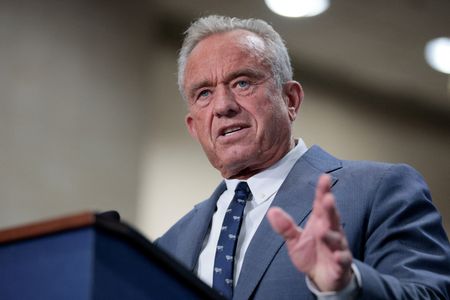
The variety of bills in Kirk’s name “shows just how deeply his influence is being felt, especially in the fight to restore intellectual diversity and core American values in education,” said Matt Shupe, a spokesperson for Turning Point USA, which Kirk founded.

A Kirk-named law signed this week by Republican Tennessee Gov. Bill Lee extols the historical “influence of Judeo-Christian values on the freedom and liberties ingrained in our culture.”

It gives permission for public schools and higher education institutions to teach about religion’s positive role in American history. And it lists 19 examples, beginning with the organization of the Pilgrims as a church and including George Washington’s direction for Army chaplains, Benjamin Franklin’s appeal for prayer at the constitutional convention and the impact of Christian evangelist Billy Graham.

Tennessee is one of several Republican-led states to partner with Turning Point USA to promote its high school chapters, called Club America. Dozens of club leaders from Tennessee attended a state Senate committee hearing last month to support the religion-in-history legislation.

Ben Mason, a junior from Providence Academy in Johnson City, said Kirk helped him “to understand that America began with Judeo-Christian values.”

“This, of course, does not mean that you must be a Christian or even believe in God to be in America, but you will hear about our roots,” Mason told lawmakers.

But Senate Democratic Leader Raumesh Akbari raised concerns.

“Our public schools are really not the place to push one religion over another,” she said. “I know that is not the stated intent of the bill, but I think that ends up being the result.”

Lawmakers turned Kirk’s name into an acronym for the “Kansas intellectual rights and knowledge” act, which deems outdoor areas on college campuses as forums for free expression. The bill’s preamble praises Kirk and cites a 2024 incident at Kansas State University in which Kirk’s microphone was shut off at the end of his allotted time, leading Kirk to wade into the crowd to continue taking questions.

The measure limits security fees charged to student organizations for events and bans designated “free speech zones” that restrict the location of such activities. The attorney general — or any who believe their rights were infringed — can sue an institution seeking damages of at least $500 per violation, and $50 for each day it continues.

The bill is similar to the Campus Free Expression Act, promoted by the Foundation for Individual Rights and Expression. About half the states already have campus free-speech laws, according to the foundation.

“Charlie Kirk was assassinated for exercising his right to free speech and introducing young people to conservative values,” Kansas Senate President Ty Masterson said after Kelly’s veto was recently overridden. “His mission and legacy will live on and protect the free speech rights of all college students in Kansas for decades to come.”

Democrats, while decrying Kirk’s assassination, were unified in opposing the bill. Democratic state Rep. Jerry Stogsdill said legislators should not honor an activist whose statements promoted “hate, bigotry, misogyny and racism.”

In Louisiana, Republicans have proposed a bill dubbed the “Charlie Kirk Success Sequence Act.” The measure would require public schools to teach that the keys to success include earning a high school diploma, immediately entering the workforce after high school or college, and marrying before having children.

A Senate committee advanced the bill this week after overcoming objections.

“Why muddy this bill up by putting a controversial political figure’s name on it?” asked Democratic Sen. Katrina Jackson-Andrews, whose attempt to remove Kirk’s name failed in the Republican-dominated committee.

“In the last 20 years, I cannot think of anyone that’s had the type of impact on our students, on our campuses and in our cities as Charlie Kirk,” said Republican Sen. Rick Edmonds, who authored the bill.

___

Associated Press writers Sara Cline, John Hanna and Jonathan Mattise contributed to this report.


Brought to you by www.srnnews.com


The Latest: Trump hints at resuming attacks if ceasefire with Iran expires without a deal

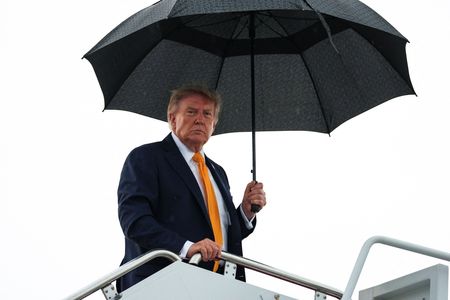
U.S. President Donald Trump said the blockade of the Strait of Hormuz will remain and attacks will resume if no agreement is reached with Iran, after Tehran said it had fully reopened the strait to commercial vessels but threatened to close it again over the U.S. blockade.

Asked by a reporter Friday night what he will do if there’s no deal when a ceasefire with Iran expires next week, Trump said, “I don’t know. Maybe I won’t extend it, but the blockade is going to remain. But maybe I won’t extend it, so you’ll have a blockade and unfortunately we’ll have to start dropping bombs again.”

However, Trump also told reporters accompanying him aboard Air Force One to Washington that, “I think it’s going to happen,” referring to a deal.

Questions lingered Saturday about how much freedom ships actually had to transit the waterway as Tehran maintained its grip on the strait and who got through, and threatened to close it again if the U.S. kept in place its blockade of Iranian ships and ports.

Iran’s Friday announcement about the opening of the crucial body of water, through which 20% of the world’s oil is shipped, came as a 10-day truce between Israel and the Iranian-backed Hezbollah militant group in Lebanon appeared to hold.

The fighting has killed at least 3,000 people in Iran, nearly 2,300 in Lebanon, 23 in Israel and more than a dozen in Gulf Arab states. Thirteen U.S. service members have also been killed.

Here is the latest:

President Donald Trump flatly rejected the idea when a reporter asked about the prospect of restrictions or tolls managed by Iran on the Strait of Hormuz.

“Nope. No way. No. Nope,” Trump said. He said there can’t be tolls along with restrictions. “No, they’re not going to be tolls.”


Brought to you by www.srnnews.com


Stories of Black and Indigenous patriots come into focus as US remembers the American Revolution

LEXINGTON, Mass. (AP) — Charlie Price says he didn’t learn much about the American Revolution in school. He knew about George Washington, the Battle of Bunker Hill and that the patriots won. It wasn’t until he joined the Lexington Minutemen — a group of Revolutionary War reenactors — that he realized there’s so much more to the story.

The Lexington Minutemen are marking the anniversary of the Battle of Lexington in Massachusetts on Saturday, as they do every year, and among the soldiers represented will be Prince Estabrook, an enslaved man who joined his white neighbors on Lexington Green in April 19, 1775, as British troops approached. He was wounded that day but went on to serve in multiple deployments throughout the war.

“I wasn’t surprised that we didn’t know about it,” said Price, a 95-year-old Black Korean War veteran who played the role of Estabrook for 50 years. “I was surprised that there was one Black soldier out here.”

As America prepares to celebrate its 250th anniversary, Estabrook and other patriots of color are being celebrated through programs nationwide that aim to tell a more complete story of the birth of the nation.

Museum exhibits, documentary films and lectures have traditionally focused on the white leaders of the American Revolution, such as Washington, Benjamin Franklin and Paul Revere.

Christopher Brown, a British Empire historian at Columbia University, said the Revolution has long been portrayed as a “simple story and a moral story that celebrates American origins and that looks to the American past in a kind of idealized version of what the present is.”

But in recent decades, “a more accurate view of the past” has emerged that showcases the diverse collection of men and women who played critical roles in the fight for freedom.

“There were Black men in the ranks who were fighting in Concord and Lexington and fought on Bunker Hill,” he said. “They knew all of the work that women were doing to support the revolutionary effort. The fact that we didn’t know that is more of a sign of our lack of curiosity and the need for greater research.”

The National Park Service estimates that by the end of the Revolution more than 5,500 patriots of color — including Black and Indigenous people — served on the colonial side, while many runaway slaves fought for the British.

The stories of Black patriots cannot be told without mentioning slavery, which was legal at the time in all 13 Colonies. Some Blacks who fought were enslaved and others fought in the hopes of gaining freedom. Indigenous soldiers made similar calculations, even as tribes fought for their very survival.

But despite the documented military diversity of that time, efforts to promote such stories are under pressure. The Trump administration has ordered the removal or censorship of some exhibits highlighting the history of slavery and enslaved people, the Civil Rights Movement and the mistreatment of Indigenous people.

Roger Davidson, Jr. an associate professor of history at Bowie State University, said failure to recognize that important part of history can impact communities of color today.

“If you’re not seen as having contributed to society, to the military, to any of it, then people can sort of overlook you,” Davidson said. “It plays into, and I hate to put it this way, but it plays into some people’s biases. Why should we pay any attention to you in the present day, politically, socially, economically, if you have not contributed?”

MA250 has handed out millions of dollars in grants to commemorate the battles across Massachusetts that helped lead to America’s independence. Among the beneficiaries is the Black Heritage Trail in Concord that highlights the lives of Black residents in the town during the Revolution.

Museum exhibitions celebrating Black patriots have also received grants. Among those highlighted is Crispus Attucks, a sailor of African and Indigenous ancestry who died on March 5, 1770, when British troops fired on a crowd in what is known as the Boston Massacre. Another, Salem Poor, was born enslaved but purchased his freedom before fighting at Bunker Hill.

American Ancestors, a nonprofit history and heritage center in Boston that also received MA250 funding, opens its “Patriots of Color” exhibit next week, throwing a spotlight on the lives of 26 Black and Indigenous men and women who played a role in the American Revolution. They include: Prince Ames, a Black and Narragansett man from Andover, who was forced to join the Continental Army in place of his enslaver; and Paul Cuffe, a Black and Wampanoag businessman, who petitioned the Massachusetts government to reject taxation without representation.

Some of their descendants will attend the opening of the exhibition.

“By telling these lesser known stories, we want to highlight that ordinary people made a tremendous difference in the arc of the country’s history,” Ryan Woods, president and CEO of American Ancestors, said.

Records about Prince Estabrook’s life are scant, but according to the National Park Service, he was likely born in the Lexington area around 1740. His father was enslaved by landowner Benjamin Estabrook, so Prince was born into slavery.

It is unclear what his life was like before he trained as a soldier in the Lexington militia. The Park Service says he was serving under the command of Colonel John Parker on April 19, 1775, when his left shoulder was struck by a musket ball. He recovered from that injury and went on to serve eight years with the militia and the Continental Army.

After the Revolution, he was granted freedom and returned to Lexington, where tax records from 1790 indicate he joined Benjamin Estabrook’s payroll as ‘a non-white freeman.’ It is unclear if he ever married, had children or owned property.

According to family records, he died in 1830, around the age of 90, and was buried in the same cemetery as Benjamin’s son, Nathan, in Ashby, Massachusetts.

Price, who has handed reenactment duties to a younger colleague but still attends the early morning reenactment every year, says it is important to know about the soldier’s life.

“Keep the story alive to make sure that everybody knows, everybody that we can get in touch with, everybody knows that Prince Estabrook was here,” Price said. “He was a viable person. He did his role, he did his part in fighting for the country.”


Brought to you by www.srnnews.com


Weapons-grade chemical carfentanil surges as dangerous substitute for fentanyl

Nearly two decades after drug addiction sent him to rehab as a teenager, 36-year-old Michael Nalewaja had settled into a quiet life in Alaska where he worked as an electrician.

That all came crashing down days before Thanksgiving 2025, when he and a mutual friend unknowingly took a lethal cocktail of fentanyl and carfentanil they may have mistaken for cocaine.

“I heard the word ‘autopsy’ and I literally just collapsed to the floor,” his mother, Kelley Nalewaja said, recalling the call she received from his wife. “Even if somebody had been there prepared with Narcan — even if somebody had called 911 in time — he was not going to survive.”

Carfentanil, a weapons-grade chemical that authorities say is 10,000 times more potent than morphine and 100 times stronger than fentanyl, has seen a drastic resurgence across the U.S., killing hundreds of unsuspecting drug users.

The rise coincides with a recent crackdown by the Chinese government on the sale of precursors used to make fentanyl. Those regulations are likely prompting traffickers in Mexico to use carfentanil to boost the potency of a weakened version of fentanyl, according to U.S. Drug Enforcement Administration intelligence bulletins reviewed by The Associated Press.

The surge of a drug so deadly that less than a poppy seed-sized amount can kill a person comes as fentanyl seizures and overall drug overdose deaths continue a multiyear decline.

“You’re talking about not even a grain of salt that could be potentially lethal,” said Frank Tarentino, the DEA’s chief of operations for its northeast region, which stretches from Maine to Virginia. “This presents an extremely frightening proposition for substance abuse dependent people who seek opioids on the street today.”

A decade ago, carfentanil exploded into the North American drug supply, causing hundreds of unsuspecting drug users to overdose, only to see a major dip after China banned it, closing a key regulatory loophole in the U.S.

But the situation has shifted dramatically in recent years.

In 2025, DEA labs identified carfentanil 1,400 times in U.S. drug seizures, compared with 145 in 2023 and only 54 in 2022, according to DEA records viewed by AP.

Traffickers in Mexico may be experimenting with producing carfentanil themselves, authorities say, while others could be procuring it from China-based vendors skirting the country’s regulations by spamming online forums in other countries with ads for the drug.

Complicating matters for the cartels are the extreme dangers associated with manufacturing carfentanil, Tarentino said.

“You can’t just dabble in this,” he said. “This is not some mad scientist on Reddit you’re going to get to go out to a rudimentary laboratory in Mexico to make carfentanil.”

U.S. overdose deaths have fallen for more than two years — the longest drop in decades. Experts point to several possible explanations, including the overdose-reversing drug naloxone being more widely available and the expansion of addiction treatment. Some have also tied it to the regulatory changes the U.S. has pressed for in China.

Experts say that even multiple high doses of naloxone might not be enough to reverse an overdose when carfentanil is involved.

Fentanyl seizures, along with several other illicit drugs, have also dipped. U.S. Customs and Border Protection reported that fentanyl seizures plunged to about 12,000 pounds (5,443 kilograms) in 2025 — less than half the amount seized in 2023.

But even as fentanyl numbers fall, it remains a major focus of the DEA. Just recently, the agency’s proposed budget included a $362 million increase centered on cartel-driven fentanyl trafficking.

“Anyone who takes a pill that is not prescribed to them by their doctor is playing a game of Russian roulette with their life,” said Sara Carter, President Donald Trump’s drug czar. “But if those terrorists think they can continue this chemical warfare without consequences, they are wrong.”

While the prevalence of carfentanil still pales in comparison to fentanyl, experts are nevertheless alarmed by the increase of a substance researched for years as a chemical weapon and deployed by Russian forces on Chechen separatists in 2002.

The DEA’s annual quota for lawfully manufactured carfentanil — veterinarians use it to tranquilize elephants and other large animals — is just 20 grams, an amount that can fit in the palm of your hand.

“It’s like a biological weapon,” said Michael King Jr., founder of the Opioid Awareness Foundation. “If the world thinks we had a problem with fentanyl, that’s minute compared to what we’re going to be dealing with with carfentanil.”

In 2024, overdose deaths involving carfentanil nearly tripled compared to the previous year, with 413 deaths across 42 states and Washington, D.C., according to the most recent data available by the Centers for Disease Control and Prevention.

“Carfentanil definitely has that potential of spreading throughout the United States unless law enforcement really focuses in on carfentanil and they develop intelligence as to how these drug addicts are getting it,” said Mike Vigil, a former chief of international operations at the DEA.

In recent months, the DEA has documented several large seizures of carfentanil. In October, the DEA Los Angeles Field Division found 628,000 pills containing carfentanil, while in September, officials seized more than 50,000 counterfeit M30 pills from a person at a gas station in Washington state that turned out to be a mixture of carfentanil and acetaminophen.

In some cases, frequent drug users have become tolerant to fentanyl and are seeking out carfentanil, despite the danger, because of the sudden euphoria it promises, explained Rob Tanguay, senior medical lead for addiction services with Recovery Alberta, a health agency in Canada. It appeals to the drug market, he said, because so little of it goes such a long way toward supply.

“The toughest part about all of this,” he said, “is that this is all about money.”

After Michael Nalewaja’s death, his mother decided against a large funeral.

Instead, she organized a town hall in her hometown of El Dorado Hills, California, bringing together local officials along with mothers who had gone through something similar.

As she grieves her son, an adept salesman full of charisma who had recently gotten a national award by the electrical union, she’s pushing for major legislative and judicial changes so others don’t go through what she did because of a drug she said was never meant for humans.

“It’s not an OD; it’s not an overdose,” she said. “It’s a murder weapon.”

___

Associated Press writer Joshua Goodman in Miami contributed.


Brought to you by www.srnnews.com


US extends waiver on Russian oil sanctions to ease Iran war shortages despite Bessent denial

WASHINGTON (AP) — The U.S. Treasury Department on Friday extended its pause on sanctions on Russian oil shipments to ease shortages from the Iran war, days after Secretary Scott Bessent ruled out such a move.

The so-called general license means U.S. sanctions will not apply for 30 days on deliveries of Russian oil that has been loaded on tankers as of Friday. It extended a similar 30-day license issued in March for Russian oil that had been loaded by March 11. The extension underscores how the fallout from the Iran war has boosted Moscow’s ability to profit from its energy exports, which had been restrained since the invasion of Ukraine.

Speaking at the White House on Wednesday, Bessent ruled out extending the license. “We will not be renewing the general license on Russian oil, and we will not be renewing the general license on Iranian oil,” he said. The administration did not immediately explain the reversal.


Brought to you by www.srnnews.com


Trump ballroom construction allowed for now, US appeals court says

WASHINGTON, April 17 (Reuters) – A U.S. appeals court allowed President Donald Trump’s administration on Friday night to continue construction of a $400 million ballroom on the site of the White House’s demolished East Wing, setting a June hearing to review a Washington judge’s order halting the project.

An order by a three‑judge panel of the U.S. Court of Appeals for the District of Columbia Circuit put the lower court’s preliminary injunction on hold for now, giving the panel time to consider the U.S. Justice Department’s request for a longer pause while the appeal is pending.

The appeals court said it will hear arguments on June 5 on whether construction should be stopped during the appeal. The order did not address the merits of the underlying lawsuit, which challenges the Trump administration’s authority to build the ballroom.

The National Trust for Historic Preservation, which filed the lawsuit last year, and the White House did not immediately respond to requests for comment after business hours.

Friday’s ruling temporarily blocks a decision issued a day earlier by U.S. District Judge Richard Leon in Washington, who said the ballroom project was unlawful without approval from the U.S. Congress.

The National Trust sued Trump and several federal agencies in December after the administration demolished the East Wing to make way for the ballroom, arguing the president and the National Park Service lacked authority to tear down the historic structure.

Trump has championed the ballroom as a defining addition to the White House and part of his broader push to reshape Washington. The administration has said the project will modernize infrastructure and bolster security. Trump has emphasized the project is funded ​entirely by private donors.

(Reporting by Mike Scarcella; Editing by Raju Gopalakrishnan)


Brought to you by www.srnnews.com


LA to pay $11.8 million to man blinded by police projectile during Dodgers celebration

LOS ANGELES (AP) — The city of Los Angeles must pay $11.8 million to a man who was blinded by a projectile fired into a crowd by police officers while he was celebrating the Dodgers 2020 World Series win.

A federal jury ordered the payment Thursday after a trial brought by 27-year-old Isaac Castellanos, who was in college when he was struck in the face by the projectile while peacefully celebrating in downtown LA early Oct. 28, 2020.

Castellanos was permanently blinded in one eye and filed a federal lawsuit in 2022, alleging excessive use of force. According to the complaint, Los Angeles Police Department officers advanced toward the crowd and began firing projectiles, also known as “ less lethal” munitions, without warning. Less lethal munitions can include rubber bullets and bean bags.

At the conclusion of the trial, the jury deliberated for less than two hours before returning a verdict. Castellanos, sitting next to his attorneys, was brought to tears.

“He is incredibly relieved and feels very vindicated,” Castellanos’ attorney, Monique Alarcon, said. “He’s really hopeful … that this will cause the LAPD to take a hard look at their crowd control practices.”

The LA City Attorney’s office did not immediately respond to an email seeking comment.

Castellanos was a senior at California State University, Long Beach when he was struck, and Alarcon said he had a promising future as a professional esports player before he was blinded. Just a few weeks before he was hit, he had won first place in a tournament, winning a $40,000 prize with a teammate.

“He was at a pivotal point in his life … and this completely derailed him,” Alarcon said.

The LAPD has been the subject of several lawsuits over the use of less lethal munitions for crowd control.

After journalists were hit by projectiles during June protests against the Trump administration’s immigration crackdown since the start of the president’s second term, a federal judge blocked LA police from using rubber bullets and other less lethal munitions against reporters.

A federal judge in January also issued an injunction against the LAPD blocking the use of 40 mm launchers, a type of less lethal munition, in any crowd control situation.

In 2021, California restricted the use of less lethal munitions until alternatives to force have been tried to control a crowd. Police cannot aim “indiscriminately” into a crowd or at the head, neck or any other vital organs. They also cannot fire solely for a curfew violation, verbal threats toward officers, or not complying with directions given by law enforcement.


Brought to you by www.srnnews.com


US and Cuban officials met recently in Havana amid new diplomatic push

WASHINGTON (AP) — An American delegation recently met with Cuban government officials in the island nation, marking a renewed diplomatic push even as U.S. President Donald Trump has threatened to intervene and Cuba’s leader said this week that his country is prepared to fight if that should happen.

A senior State Department official met with the grandson of retired Cuban leader Raúl Castro last week during the trip, according to a department official, who was not authorized to comment publicly and spoke Friday on condition of anonymity to discuss the sensitive matter.

The official did not say who from the U.S. met with Raúl Guillermo Rodríguez Castro, whose grandfather is believed to play an influential role in the Cuban government despite not holding an official post. A second U.S. official said Secretary of State Marco Rubio was not part of the delegation that visited Havana.

U.S. officials have previously said Rubio, the son of Cuban immigrants and a longtime Cuba hawk, met the younger Castro in the Caribbean island nation of St. Kitts and Nevis in February.

During last week’s extraordinary diplomatic push, which was reported earlier by Axios, the U.S. delegation urged Cuba to make major changes to its economy and way of governing because it would not let the island nation become a national security threat in the region, the State Department official said.

It marked the first U.S. government flight to land in Cuba other than at the U.S. Naval Base at Guantanamo Bay since 2016.

Cuba’s crises have deepened following a U.S. energy blockade, coming as the Trump administration has described its government as ineffective and abusive. In return for easing sanctions, U.S. demands have included an end to political repression, a release of political prisoners and a liberalization of the island’s ailing economy.

Along with those similar topics, the sides last week also discussed a U.S. proposal to provide free and reliable internet to the island through a Starlink satellite connection, the State Department official said.

The talks were revealed after Trump said earlier this week that his administration could focus on Cuba after the war in Iran ends.

“We may stop by Cuba after we finish with this,” he said. He described it as a “failing nation” and asserted that it has “been a terribly run country for a long time.”

In response, Cuban President Miguel Díaz-Canel said the U.S. has no valid reason to carry out a military attack against the island or attempt to depose him but that the country was ready to fight back if needed.

“The moment is extremely challenging and calls upon us once again, as on April 16, 1961, to be ready to confront serious threats, including military aggression. We do not want it, but it is our duty to prepare to avoid it and, if it becomes inevitable, to defeat it,” Díaz-Canel said.

He was speaking during a rally that drew hundreds of people to commemorate the 65th anniversary of the declaration of the Cuban Revolution’s socialist essence.

The Cuban Foreign Ministry didn’t immediately respond to messages seeking comment about the talks last week.


Brought to you by www.srnnews.com


Key prosecutor in John Brennan investigation has been removed from case, AP source says

WASHINGTON (AP) — A lead prosecutor in the John Brennan investigation has been removed from the case after expressing concerns to Justice Department officials about the legal strength of a potential criminal prosecution of the former CIA director, a person familiar with the matter said Friday.

Maria Medetis Long told defense lawyers involved in the investigation that she was no longer participating in the Brennan investigation. Her departure from the investigation came after she conveyed doubt that there was sufficient evidence for a criminal case against Brennan, said the person, who spoke on condition of anonymity to The Associated Press to discuss internal Justice Department conversations.

The Justice Department did not dispute that Medetis Long was no longer part of the investigation but also did not elaborate on the circumstances of her departure. The department said in a statement that “as a matter of routine practice, attorneys are moved around on cases so offices can most effectively allocate resources. It is completely healthy and normal to change members of legal teams.”

CNN first reported Medetis Long’s departure from the investigation. She referred a request for comment to a spokesperson for her office, who did not immediately provide a statement.

Medetis Long heads the national security section at the U.S. Attorney’s office for the Southern District of Florida, which for months has been scrutinizing Brennan in connection with one of President Donald Trump’s chief grievances — the U.S. government’s years-old investigation into potential ties between Russia and Trump’s 2016 campaign for the White House.

Brennan served as CIA director under President Barack Obama and was in the position when the intelligence community published a detailed assessment of Russian interference in the 2016 presidential election. The Justice Department last year received a referral from Rep. Jim Jordan, the Republican chairman of the House Judiciary Committee, asserting that Brennan had given false testimony about the preparation of that assessment — a claim Brennan and his lawyers have vigorously denied.

Investigators who in recent months have issued a flurry of subpoenas have been preparing for additional interviews in the probe, though it remains unclear whether any charges will be brought or what impact Medetis Long’s departure will have on the case or on witnesses’ willingness to cooperate.

Trump this month replaced Pam Bondi as his attorney general, frustrated by the lack of progress in criminal investigations against political opponents like Brennan.

Her deputy, Todd Blanche, is now acting attorney general and has said that Trump has the right and duty to be involved in seeking investigations against people he has had “issues with.”

Last year, Trump effectively forced out the acting U.S. attorney in the Eastern District of Virginia, Erik Siebert, after Siebert did not push forward with criminal charges against two other Trump foes, former FBI Director James Comey and New York Attorney General Letitia James. A hastily installed loyalist prosecutor, Lindsey Halligan, subsequently secured indictments against Comey and James but the cases were thrown out after a judge concluded that Halligan was unlawfully appointed.

_____

Associated Press writer Alanna Durkin Richer in Washington contributed to this report.


Brought to you by www.srnnews.com


Roommates of man accused of killing 2 say a dispute preceded the Atlanta-area attacks

DECATUR, Ga. (AP) — A U.S. Navy veteran accused of killing two people and critically injuring another in a series of attacks in the Atlanta area had, shortly before the shootings, stormed out of his communal house after getting into an intense argument over the air conditioning in the home, according to his roommates.

Authorities have not offered a potential motive for Monday morning’s attacks. Among the victims was an auditor for the Department of Homeland Security who was walking her dog near the suspect’s home.

The suspect in the shootings, Olaolukitan Adon Abel, a 26-year-old U.K. native, is charged in state court in DeKalb County with two counts of malice murder, aggravated assault and firearms counts. He also is facing a federal firearms charge, along with another man who is accused of buying the gun used in the shootings for him, prosecutors announced Friday.

Adon Abel lived with six others in separate units of a home listed on PadSplit, a platform offering low-cost shared housing. He was granted U.S. citizenship in 2022 while serving in the Navy and stationed in the San Diego area.

Three roommates told The Associated Press that Adon Abel and a male roommate were screaming at each other late Sunday night over how cold Adon Abel kept the house in Panthersville, a suburb southeast of Atlanta.

“He (kept) the house freezing,” roommate Angela Britton said Friday. “It’s not the first time they got into it about the AC. But that time was a real big argument.”

Another roommate, Lakisha Mckinzie, said the fight scared her so much that she called her mother before bed and asked her to pray for her and her roommates’ safety, telling her there had been a lot of “chaos and tension” in the home.

Mckinzie said she had been afraid of Adon Abel ever since he inappropriately touched her last month after asking her on a date. Mckinzie said he frequently knocked on her door late at night, but she never answered. She said she complained to her landlord multiple times, but no action was taken. PadSplit did not respond to a request for comment about whether it knew about Adon Abel’s alleged behavior in the home.

After the argument, the roommates said Adon Abel packed up a large duffel bag and drove off shortly after midnight Monday morning.

Around 12:50 a.m., and about 5 miles (8 kilometers) away, 31-year-old Prianna Weathers was fatally shot outside a Decatur-area fast food restaurant, investigators said.

Then, around 2 a.m., a 49-year-old homeless man was shot multiple times while sleeping outside a grocery store in Brookhaven, about 12 miles (19 kilometers) northwest of the first attack, Brookhaven Police Chief Brandon Gurley said. The man, whose name hasn’t been released, remains hospitalized in stable but critical condition, authorities said Thursday.

DHS worker Lauren Bullis, who was out walking her dog a few hundred feet from Adon Abel’s home, was found around 7 a.m. with gunshot and stab wounds.

Authorities have linked Adon Abel to all three attacks, though it is unclear whether he knew any of the victims — police have said they believe at least one victim was targeted at random.

Georgia State Patrol troopers stopped Adon Abel’s car around 11 a.m. Monday in Troup County, not far from the Georgia-Alabama border. Inside the vehicle, investigators said they found ammunition and shell casings matching those at the scene of Weathers’ killing. Police found the gun and shell casings on the ground near Bullis, Hertzberg said.

Adon Abel is now also facing prosecution in federal court for illegally possessing a firearm, officials announced Friday.

He was charged with a firearms violation along with a 35-year-old homeless man, Damon Marquis Yarns. U.S. Attorney Theodore S. Hertzberg, the top federal prosecutor for northern Georgia, said Yarns acknowledged buying the gun used in the shootings for Adon Abel and falsely stating on a federal form that he was the owner.

Adon Abel is accused of illegally possessing the gun as a person previously convicted of a felony.

Monday’s crimes led Homeland Security Secretary Markwayne Mullin to issue a statement raising concerns that Adon Abel was granted U.S. citizenship when Joe Biden was president. Mullin has catalogued a litany of the defendant’s previous alleged crimes, but it is unclear whether any of them happened before he became a citizen.

Adon Abel pleaded guilty in October 2024 in San Diego County, California, to charges of assault with a deadly weapon and criminal vandalism over what authorities there said was an attack on two police officers and another person, according to California court records.

Online court records show that someone listed with a similar name and the same birth date pleaded guilty last June in Chatham County, Georgia, to four misdemeanor counts of sexual battery.

Yarns is accused of buying the 9 mm pistol used in the shootings at a federally licensed firearms dealer in Atlanta on Feb. 20. Hertzberg said that a special agent with the Bureau of Alcohol, Tobacco, Firearms and Explosives interviewed Yarns on Thursday, and Yarns said he had purchased the gun for a Nigerian or British man he knew only as “Abdul or Obie,” then identified Adon Abel from a photo.

___

Hanna reported from Topeka, Kansas.


Brought to you by www.srnnews.com


Townhall Top of the Hour News


Local Weather - Sponsored By:

CLINTON WEATHER

Local News

DeWittDN on Facebook